
Review
02h 38 min ago
First-Time Home Buyer’s Guide in Nigeria: Everything You Must Know
Introduction: Why Buying Your First Home in Nigeria Feels So Confusing For many Nigerians, owning a home is more than a financial goal—it’s a life milestone, a symbol of stability, success, and security. But for first-time buyers, the Nigerian real estate market can feel like a maze filled with confusing documents, aggressive agents, land scams, unclear pricing, and legal traps. Stories are everywhere: - Someone bought land and later discovered it belonged to the government - A family paid millions for a house without a valid title - Another buyer lost everything to a fake developer The truth is this: Buying a home in Nigeria is safe—if you understand the process. This guide breaks everything down step by step, using real Nigerian laws, real market practices, and real buyer experiences, so you can confidently buy your first home without fear. Chapter 1: Understand the Nigerian Property Market First Before you even start searching for a house, you must understand how property works in Nigeria. 1. Property Is Governed by the Land Use Act In Nigeria, all land technically belongs to the government. Individuals don’t “own” land outright—they are granted the right to occupy it. This right is proven through legal documents such as: - Certificate of Occupancy (C of O) - Governor’s Consent - Deed of Assignment If a property has no recognized title, you are not legally protected. 2. There Is No Central Property Database Unlike some countries, Nigeria does not have one public database where you can verify land ownership instantly. This means: - You must rely on physical searches - You need professionals (lawyers, surveyors) - Due diligence is not optional Chapter 2: Decide What You Can Truly Afford One of the biggest mistakes first-time buyers make is underestimating the total cost. 1. The Real Cost Is More Than the House Price If a house costs ₦30 million, your total expense may reach ₦35–₦40 million after adding: Cost Item Typical Range Legal Fees 5% – 10% Agency Fees 5% Survey Plan ₦150k – ₦500k Governor’s Consent 3% – 5% Stamp Duties 0.5% – 1% Registration Fees Varies Moving & Renovation Variable Golden rule: - Always budget 20–30% extra beyond the purchase price. 2. Mortgage vs Outright Purchase Most Nigerians buy homes outright, but mortgages exist. Mortgage options in Nigeria: - Federal Mortgage Bank of Nigeria (FMBN) - Primary Mortgage Banks (PMBs) - Cooperative society mortgages - Developer-assisted payment plans Mortgages typically require: - Proof of income - Equity contribution (10–30%) - Long approval timelines For first-time buyers, payment plans with reputable developers are often more practical. Chapter 3: Choosing the Right Location (This Matters More Than the House) A common saying in real estate is: “You can change the house, but you can’t change the location.” Key Factors to Consider: - Security level - Road access - Flood history - Electricity supply - Water availability - Proximity to work and schools - Future development plans Red Flags: - Extremely cheap prices in “hot” areas - Roads that become inaccessible during rain - No visible development nearby - Disputes between families and government Chapter 4: Types of Property You Can Buy in Nigeria As a first-time buyer, you’ll likely encounter: 1. Land Only Cheaper upfront, but requires construction later. 2. Off-Plan Properties You pay while the house is still under construction. - Lower initial cost - Higher risk if developer fails 3. Newly Built Houses More expensive but safer and faster to move in. 4. Old Houses May require renovation but can be in prime locations. Chapter 5: Understanding Property Titles (This Can Save You Millions) Never buy property without verifying the title. Common Property Titles in Nigeria: Certificate of Occupancy (C of O) - Issued by state government - Strongest proof of land ownership Governor’s Consent - Required when land is sold or transferred - Confirms government approval of the transaction Deed of Assignment - Shows transfer of ownership from seller to buyer - Must be registered Excision - Proof that land was released from government acquisition Gazette - Government publication confirming excision - Never accept “family receipt” or “community allocation” as final proof. Chapter 6: The Professionals You MUST Work With Trying to save money by skipping professionals is how many buyers lose everything. 1. Real Estate Lawyer (Mandatory) Your lawyer will: - Conduct title search - Draft and review agreements - Register documents - Protect your interest legally 2. Surveyor Confirms: - Land size - Boundaries - Whether land falls under government acquisition 3. Estate Agent (Optional but Helpful) Use registered agents only and avoid pressure tactics. Chapter 7: Step-by-Step Buying Process in Nigeria Step 1: Property Inspection Physically inspect the property—never rely on pictures alone. Step 2: Title Search Your lawyer conducts searches at: - Lands Registry - Surveyor-General’s Office - Relevant government agencies Step 3: Price Negotiation Everything is negotiable in Nigerian real estate. Step 4: Agreement & Initial Payment A formal agreement is drafted before major payment. Step 5: Full Payment & Documentation Payments should be traceable—avoid cash. Step 6: Governor’s Consent & Registration This completes legal ownership transfer. Chapter 8: Common Scams First-Time Buyers Fall For - Buying without title verification - Paying without a lawyer - Buying government-acquired land - Trusting verbal agreements - Fake developers with flashy ads - Multiple sales of the same property If the deal feels rushed, walk away. Chapter 9: Buying from Developers vs Individuals Developers Pros: - Structured payment plans - New buildings - Estate security Cons: - Delays - Risk of abandonment Individuals Pros: - Faster transaction - Negotiable pricing Cons: - Title risks - Hidden disputes Chapter 10: Final Checklist Before You Pay - Lawyer confirms clean title - Survey verified - Agreement signed - Payment plan documented - Receipts issued - Government consent initiated If any box is unchecked—do not pay. Conclusion: Your First Home Is a Legacy Decision Buying your first home in Nigeria is not just a transaction—it’s a legacy move. When done correctly, it: - Secures your future - Protects your family - Builds generational wealth When rushed or poorly handled, it can wipe out years of hard work. Take your time. Ask questions. Work with professionals. The safest home purchase is an informed one.

Buying your first home in Nigeria can either be the best decision of your life—or your most expensive mistake.
EstateGo Admin EstateGo
Leave a comment
Your email address will not be published. Required fields are marked *
Read latest story
Discover the latest stories that inspire, inform, and captivate.
Dive into a world of insightful content crafted to keep you engaged and in the know.
 08h 36 min ago
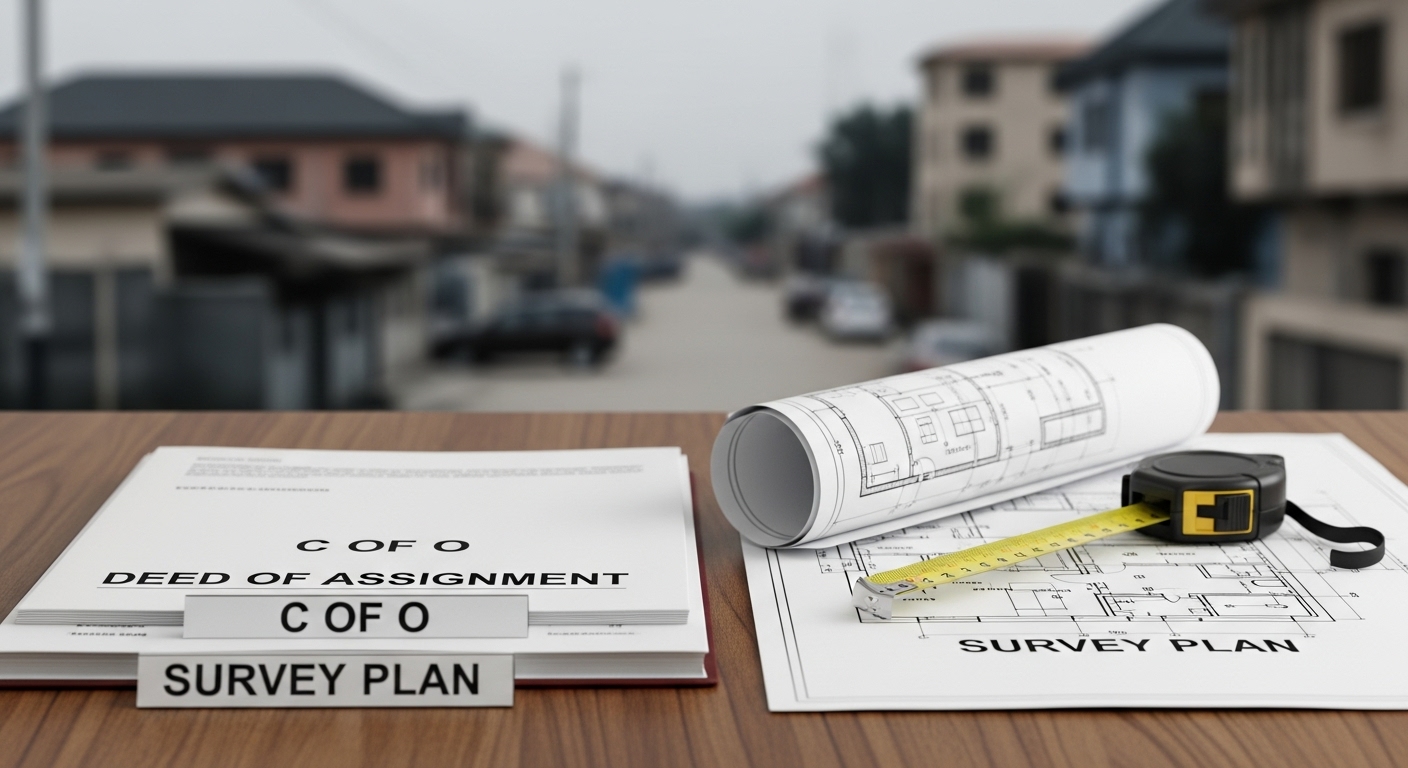
Understanding Property Documents: C of O, Deed of Assignment, and Survey Plans
Why Property Documents Are More Important Than the Land Itself In Nigeria, land ownership is not pr...
READ MORE 07h 36 min ago
Common Real Estate Scams and How to Avoid Them
Common Real Estate Scams and How to Avoid Them Real estate is one of the biggest investments anyo...
READ MORE 03h 15 min ago
Renting vs Buying: Which Makes More Sense in Today’s Economy?
Introduction: The Question Everyone Is Asking For decades, buying a home has been sold as the ult...
READ MORE
5 Comments
Ademuyiwa
Digital solutions is definitely the new standard in modern property managemen
Lucky
I am in fact grateful to the owner of this web page who has shared this wonderful piece of writing at at this time.
Ibrahim
It's clear that centralized platforms like EstateGO are the future of estate management. Love how it tackles both the operational and financial sides with equal depth
Issa Ajao
This app makes financial oversight and audits so much more efficient. EstateGO is definitely built with long-term property sustainability in mind.
Nabeel
Tracking financial transactions very important..this is a good initiative