
Review
07h 36 min ago
Common Real Estate Scams and How to Avoid Them
Common Real Estate Scams and How to Avoid Them Real estate is one of the biggest investments anyone can make—yet it’s also one of the most targeted sectors for scammers. Every year, millions are lost globally to fake agents, phantom properties, illegal documents, rental fraud, and land-grab schemes. This guide breaks down the most common real estate scams, real-life red flags, and practical steps to avoid them so buyers, renters, and investors can stay protected. 1. Introduction Imagine cleaning a home from dust, dirt, and bacteria—you inspect every corner, you use the right tools, and you verify before you trust. That’s exactly how real estate should be handled: carefully, strategically, and with attention to detail. Real estate scams thrive where: People rush decisions Verification is ignored Greed overrides logic Trust replaces evidence This blog will act as your disinfectant against fraud—spotting, exposing, and wiping out scams before they touch your wallet. 2. The Most Common Real Estate Scams A. Rental Listing Scams (Phantom Rentals) What it is: Scammers list homes or apartments they don’t own, often using photos stolen online. They demand deposits to “secure the space” and vanish afterward. How it works: Fake property posted online Attractive pricing to lure victims Scammer pressures you to pay fast No physical viewing allowed OR rushed viewing with excuses Deposit demanded via personal bank transfer Scammer disappears Red flags: “I’m out of the country, just send payment” No keys or agent available for proper inspection Unrealistically cheap rent No tenancy agreement provided Insists you don’t need to see the landlord Uses emotional urgency: “Someone else wants it, pay now!” How to avoid: Always view the property physically Verify ownership with the landlord or property manager Pay only into a company or verified landlord account Insist on a signed rental contract before payment Reverse-search property images online to confirm originality B. Fake Real Estate Agents / Agencies What it is: Fraudsters pose as agents or open fake agencies to collect fees for listings, inspections, or documentation. Red flags: No business registration or license No office address or a shared temporary workspace Refuses to show ID or credentials Cannot answer questions about property history Uses personal email instead of business domain No traceable online presence or reviews How to avoid: Request agent’s ID card, license, or agency registration Confirm the agency on government business registries Visit the agency office if possible Avoid cash payments without receipts C. Title / Document Fraud What it is: Scammers forge land titles, deeds, certificates, survey plans, or sale agreements to sell property illegally. How it works: Fake documents prepared Scammer claims land is “free from issues” Offers land at suspicious discount No verification access allowed Buyer pays, later discovers documents are fake or land is already owned Red flags: No survey number or incomplete land description Seller avoids legal verification process No lawyer or escrow involved Documents contain spelling errors or missing stamps How to avoid: Hire a qualified lawyer for title verification Confirm documents at the land registry Ensure property has a verifiable survey plan Never skip due diligence for discounts D. Double-Selling Scam What it is: A fraudster sells the same land or house to multiple buyers using duplicate contracts. Red flags: Seller rushes payment without legal transfer No record at land registry No physical demarcation of land Multiple agents involved with conflicting details How to avoid: Complete legal transfer immediately after payment Register property under your name as soon as possible Use escrow or lawyer-supervised payment E. Unfinished Property / Developer Scam What it is: A fake or unverified developer collects money for off-plan properties that never get built. How it works: Glossy brochures, 3D images, social media ads No real construction site or slow progress Developer demands full payment upfront Project stalls forever Red flags: No physical office or construction site No previous completed projects No allocation documents or buyer protection policy “Promo ends tomorrow!” pressure How to avoid: Visit the construction site Research developer history and past projects Avoid full upfront payment without milestone-based agreements Confirm RERA/real estate developer registration where applicable F. Mortgage / Loan Scam What it is: Scammers pose as lenders offering fake home loans with advance processing fees. Red flags: Asks for loan processing fee before approval No official paperwork No bank or financial institution backing Promises guaranteed approval How to avoid: Take loans only from registered banks or mortgage institutions Never pay fees without official documentation Confirm lender identity G. Land-Grab / Omonile / Community Extortion Scam (Common in West Africa) What it is: Groups demand illegal fees for land access, development, fencing, or building after purchase. Red flags: Fees not disclosed before payment No government authorization Uses threats or intimidation How to avoid: Verify if fees are legally recognized Register land officially Ensure seller settles all community-approved dues before sale Work with lawyers and government land agencies H. Fake Auction Scam What it is: Scammers hold fake property auctions and collect payments for non-existent bids. Red flags: Auction not backed by bank or government No physical property verification No auctioneer certification How to avoid: Confirm auction authorization Inspect the property Verify auctioneer license I. Property Inspection Fee Scam What it is: Fake agents charge multiple people a fee to inspect properties that are not actually for rent or sale. Red flags: Charges inspection fee for every property No receipt issued No property access after payment How to avoid: Avoid inspection fees unless part of an official agency policy Demand receipts Confirm property existence J. Short-Let / Vacation Rental Scam What it is: Fraudsters list short-stay apartments for travelers, collect booking fees, and disappear. Red flags: No verifiable host No booking platform protection Personal account payments only How to avoid: Book through platforms with payment protection Confirm host identity Ask for live video walkthrough if distant 3. Real-Life Case Study Style Section Case 1: The Too-Good-To-Be-True Apartment A family saw a 4-bedroom apartment listed at half the normal rental price. The agent said the landlord needed money urgently and requested a 2-year advance payment. Viewing was rushed, keys were unavailable, and pressure was intense. They paid. Later, the real landlord returned and had never authorized the listing. Case 2: The Land With 5 Owners An investor bought land without a lawyer. The seller provided documents with blurry stamps. Months later, 4 other people showed contracts for the same land. None were registered at the land bureau. Lesson: In real estate, verification is your cleaning agent. If you skip it, the dirt stays hidden until it spreads. 4. Universal Protection Checklist | Step | What to do | ---- | ------------------------------------- | 1 | Inspect property physically | 2 | Verify owner identity | 3 | Request legal documents | 4 | Confirm at land registry | 5 | Use a lawyer or escrow | 6 | Avoid urgent pressure payments | 7 | Collect receipts for all transactions | 8 | Confirm agent or developer license | 9 | Register property immediately | 10 | Trust evidence, not stories 5. Technology Tools You Can Use (Free & Legal) Google Image Reverse Search → verify if property images are stolen CAC / Government Business Registry → verify agency or developer registration Land Bureau Verification Portal → confirm land records Truecaller / ID verification → confirm agent identity Bank mortgage platforms → avoid fake lenders 6. Safe Payment Rules Never pay to personal accounts unless verified as owner Never pay without contract Avoid cryptocurrency or gift-card property payments Use bank transfer, escrow, or cheque supervised by lawyer Collect stamped receipts for every payment 7. Legal Rights Every Buyer/Renter Should Know You have the right to verify property documents You have the right to a tenancy or sale agreement You have the right to know all fees before payment You have the right to request agent credentials You have the right to register your property 8. If You’ve Already Been Scammed (General Advice, No Harmful Details) Report to authorities immediately Freeze bank transfer if recent Submit evidence to legal counsel Warn others to prevent spread Don’t blame yourself—scams are crimes, not your identity 9. Cleaning-Service Style Analogy Section Think of scammers like: Dust → looks small but spreads Stains → hidden until inspected Germs → infect others if not exposed Mold → grows where neglected Your defense tools are: Inspection = Vacuum Lawyer = Disinfectant Registry = Quality Control Receipts = Proof of Clean Verification = Deep Clean 10. Conclusion Real estate is not a gamble. It is a process. The smartest investors and renters don’t just look—they inspect, verify, document, register, and confirm. Scammers fear one thing: a buyer who asks for proof. Stay alert. Stay verified. Stay protected.

Real estate is one of the biggest investments anyone can make—yet it’s also one of the most targeted sectors for scammers.
EstateGo Admin EstateGo
Leave a comment
Your email address will not be published. Required fields are marked *
Read latest story
Discover the latest stories that inspire, inform, and captivate.
Dive into a world of insightful content crafted to keep you engaged and in the know.
 08h 36 min ago
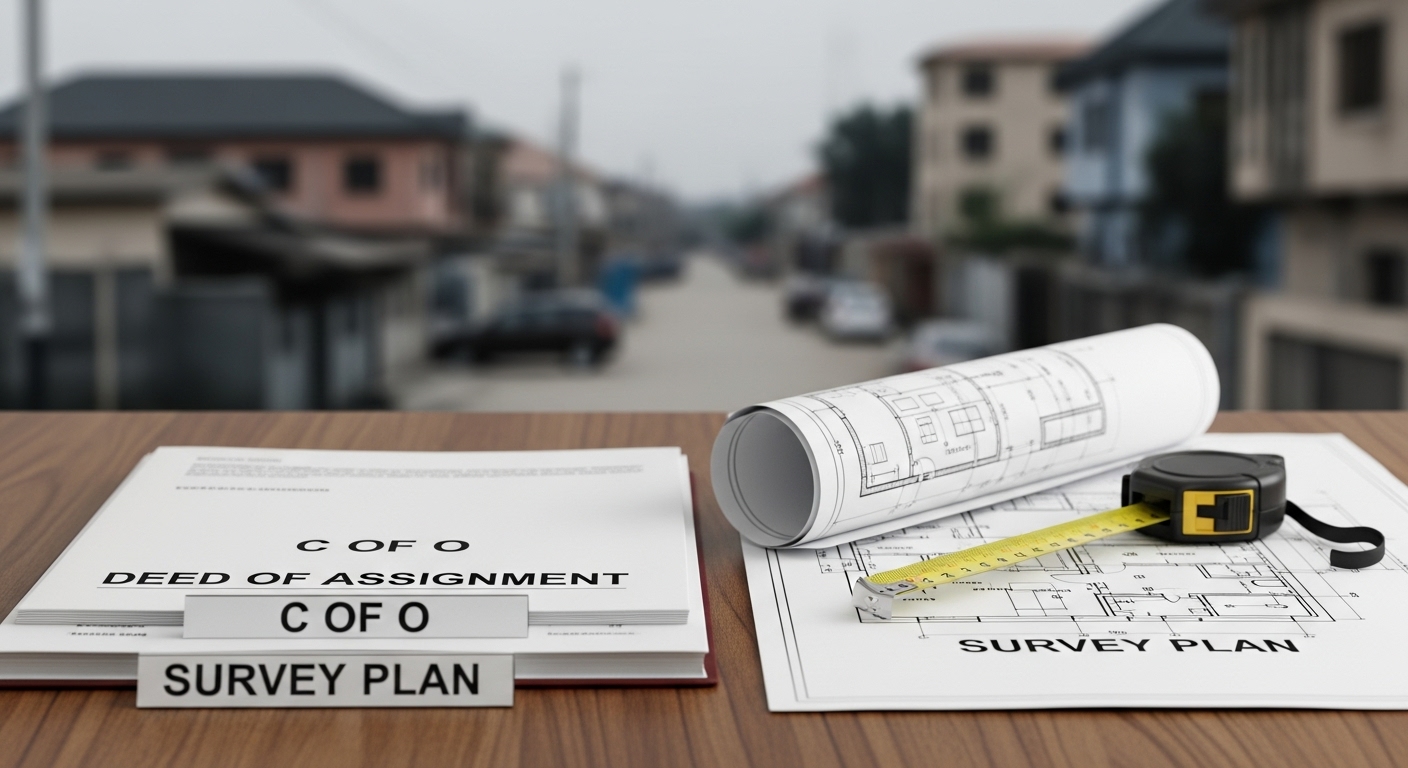
Understanding Property Documents: C of O, Deed of Assignment, and Survey Plans
Why Property Documents Are More Important Than the Land Itself In Nigeria, land ownership is not pr...
READ MORE 07h 36 min ago
Common Real Estate Scams and How to Avoid Them
Common Real Estate Scams and How to Avoid Them Real estate is one of the biggest investments anyo...
READ MORE 03h 15 min ago
Renting vs Buying: Which Makes More Sense in Today’s Economy?
Introduction: The Question Everyone Is Asking For decades, buying a home has been sold as the ult...
READ MORE
5 Comments
Ademuyiwa
Digital solutions is definitely the new standard in modern property managemen
Lucky
I am in fact grateful to the owner of this web page who has shared this wonderful piece of writing at at this time.
Ibrahim
It's clear that centralized platforms like EstateGO are the future of estate management. Love how it tackles both the operational and financial sides with equal depth
Issa Ajao
This app makes financial oversight and audits so much more efficient. EstateGO is definitely built with long-term property sustainability in mind.
Nabeel
Tracking financial transactions very important..this is a good initiative